Repairs · Toronto
Garage Door Manual Lock Repair
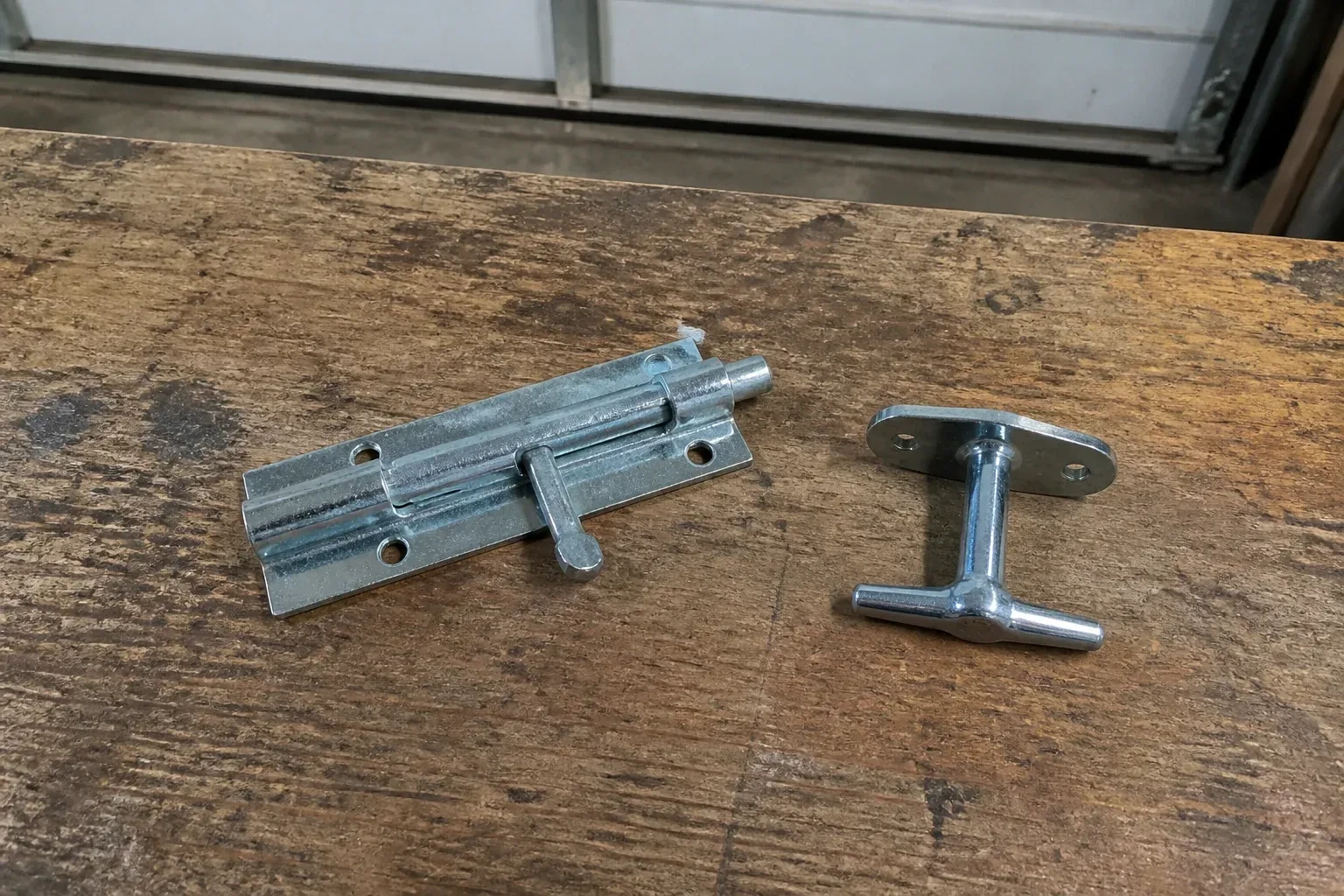
On the old wooden door out back, one lock bar hangs loose from a rusted guide and the other is bent at an angle, so the handle turns but the door can still be lifted a hand's width from outside.
Garage Door Manual Lock Repair
In plain words
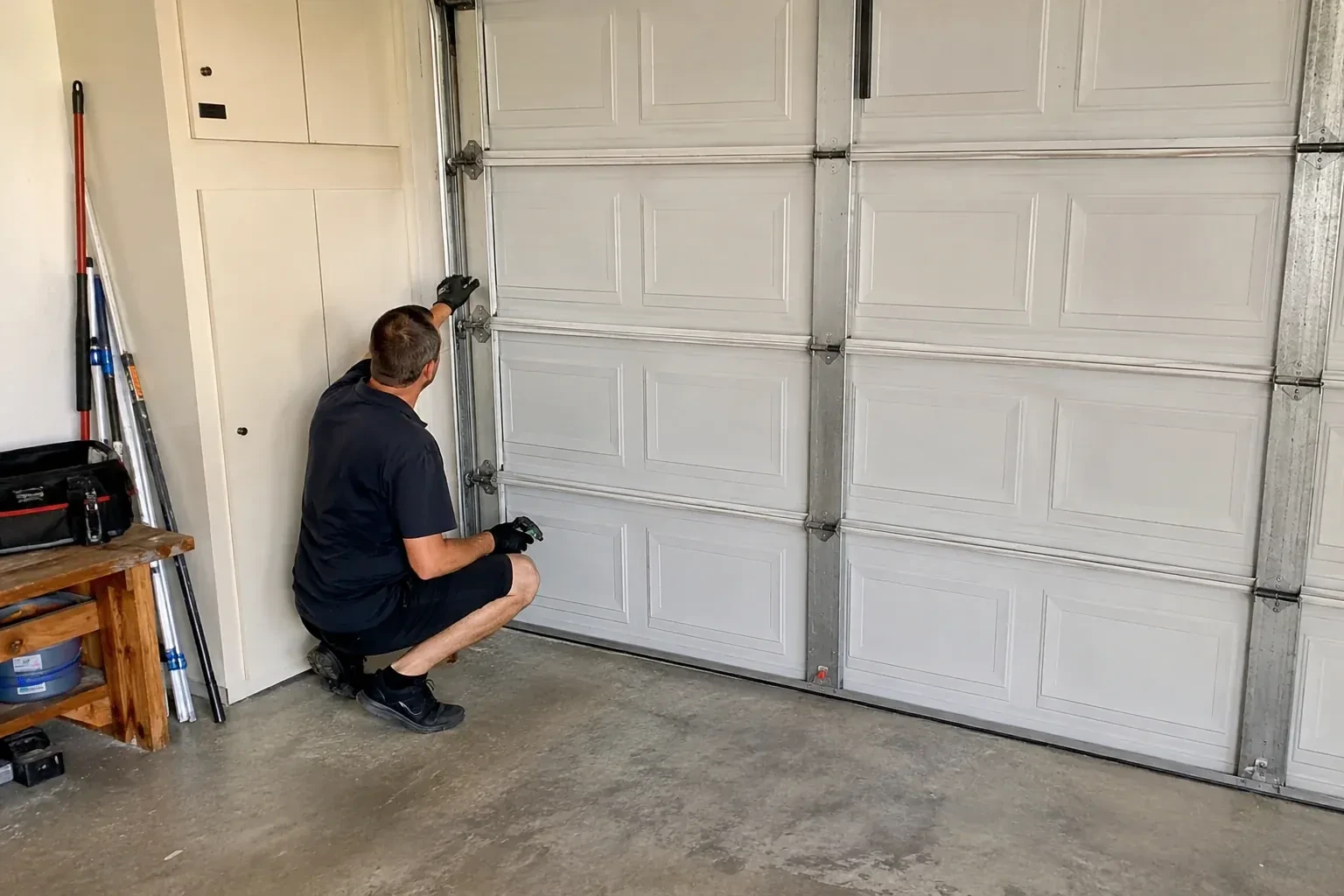
Many lock complaints turn out to be door complaints. The bar on a slide lock or a T-handle has to land in a small slot, and it only gets there if the door stops exactly where it stopped when the lock was fitted. A floor that has heaved, a track bracket that has loosened, a bottom seal that has flattened, or ice under the door all shift that landing point. The visit begins with the door: closed by hand, checked for level and for how it meets the floor and the tracks. With the door where it belongs, the lock often needs only a small adjustment to its guides.
How the visit goesIt is a February morning and the key goes only halfway into the garage handle. Yesterday's melt ran down the door face and into the keyway, and overnight it set like glass. The key flexes; the cylinder stays put.
Toronto
How the visit goes
The cylinder and its key
A keyed handle gets the same attention a house lock would. The technician tries the key, feels for grit, ice or wear, and checks whether the cylinder is firm in the handle or has worked loose. A key that turns freely without unlocking anything means the tailpiece or cam at the back of the cylinder has broken or slipped. A key that will not enter or turn in cold weather usually means meltwater has frozen in the keyway. A key that needs a wiggle means worn pins or a worn key. Whether you hold a key at all is noted too, since a lost key shifts the plan from repair to rekeying or replacement.
Freeing and renewing the bars and guides
Bars that have stiffened are worked loose with penetrating oil and then cleaned back to bare metal, while guides packed with rust are removed, cleaned or replaced with new ones fixed into sound material. A bar that has kinked is replaced rather than straightened, since spring steel that has been bent once takes a set and binds forever after; the new bar is cut to suit the door's width so it reaches through the track with a comfortable margin and retracts fully clear. Both bars are set to the same throw so the door locks evenly on both sides. A light film of silicone on the bars, not grease, finishes the job.
Getting the cylinder and bars through winter
The outside cylinder sits on a cold steel face where meltwater runs, so it gets a dry graphite or PTFE lubricant rather than oil, which would trap moisture and grit. A puff at the start of the cold season and another after the first thaw keeps the pins moving. A small tube of lock de-icer in the car is the answer to a keyway that has frozen; hot water is never poured on it. The bars and their guides, which live where salt spray collects, take a light silicone film in late autumn. Keep the threshold clear of packed snow so the door closes to its full depth and the bolt still finds its slot.
Garage Door Manual Lock Repair
In the van
- Key blanks and rekeying pins
- Opener lock-out reminder label
- Lock cylinder with tailpiece
- Centre lock body and return spring
- Inside slide bolt or snap latch
What affects the quote
Same fees day, night or weekend
1Age and pattern of the lock
Older handles and mechanisms may need a matching-pattern replacement so the existing cutout and bars line up. Sourcing or adapting parts for an uncommon lock shows in the quote.
2Related hardware noticed on the way
Worn rollers, a loose track bracket or a tired bottom seal seen while the door is being aligned are pointed out and offered as optional items, since they are easy to do in the same visit.
3One door or two
A garage with two single doors, or a house with a second garage, doubles the hardware to check and often the parts to fit. Doing both in one visit is efficient and quoted as such.
Garage Door Manual Lock Repair: questions
I have no key for the outside handle. Can it be made to work?
Yes. The cylinder is removed and either rekeyed to a fresh combination, so any key held by a previous owner is retired, or replaced with a new cylinder carrying the correct tailpiece. New keys are cut and tested in the handle before the technician leaves. If a locked door has to be opened first, the technician confirms your connection to the property as a matter of course.
What happens during the visit?
The opener is disconnected and the door lowered by hand and checked for level. The lock is identified and examined: handle, spindle, centre body, bars, guides, cylinder, fixings and track slots. Adjustments come first, then any worn parts are renewed, and the lock is worked from both sides with the door shut. The opener is reconnected and run, and you are shown how the lock and opener are to be used together.
Does lock work involve the springs or cables?
The lock, its bars and its guides all live on the door sections and the tracks, well away from the counterbalance, so the visit involves no winding or unloading of springs. Where a lock misses its slot because the door hangs crooked or sits high, the door's balance or a cable may be part of the story, and the technician points that out so it can be dealt with properly.
Repair & Maintenance
- Garage Door Tune-UpYou moved in a few months ago and have no idea when the garage door was last looked at.
- Off-Track Garage Door ResetThe door came down fine but with a scraping noise, and now the vertical track on one side is bowed…
- Garage Door Panel ReplacementFrom outside, the horizontal groove between two sections now steps sideways by a centimetre.
Garage Door Manual Lock Repair near you
Every garage door service we offer in Toronto is described the same way: what you might have noticed, what the technician checks first, how the work is done and what you have afterwards. Start with the symptom you are seeing and the right service will be easy to find.