Springs · Toronto
Garage Door Hinge Replacement
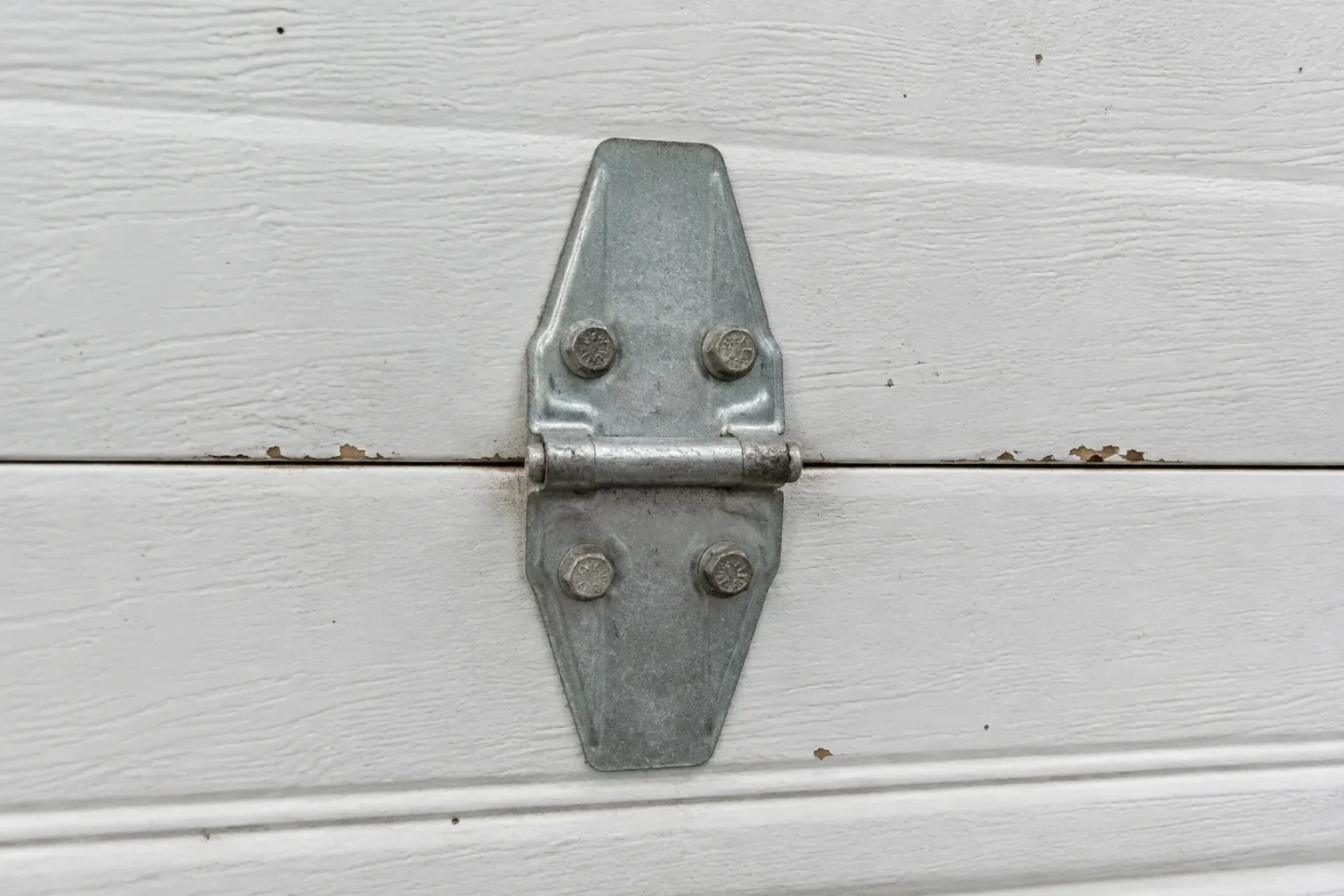
After a cold night the bottom seal had frozen to the slab. The opener strained, something gave, and now one of the upper hinges sits with its leaf bent outward and the panel below it flexes when the door moves.
Garage Door Hinge Replacement
In plain words
Hinges come in different thicknesses, and the visit is a chance to fit the right one. Steel gauge runs backwards: a larger number means thinner metal, so an 18-gauge hinge suits a light single door while 14-gauge is the heavier residential standard and 11-gauge is commercial stock. A heavy insulated double door, a door used many times a day, or a door whose hinges keep cracking at the knuckle benefits from moving up a gauge. The technician also checks that the hinge width and hole pattern match the door's stiles, since patterns vary between makers. You leave with hinges suited to the door's weight.
How the visit goesPressing a hand against one of the middle hinges makes it rock on the panel. The screws turn and turn without ever tightening, and there is a rattle from that spot every time the door settles onto the floor.
Toronto
How the visit goes
The rollers the hinges carry
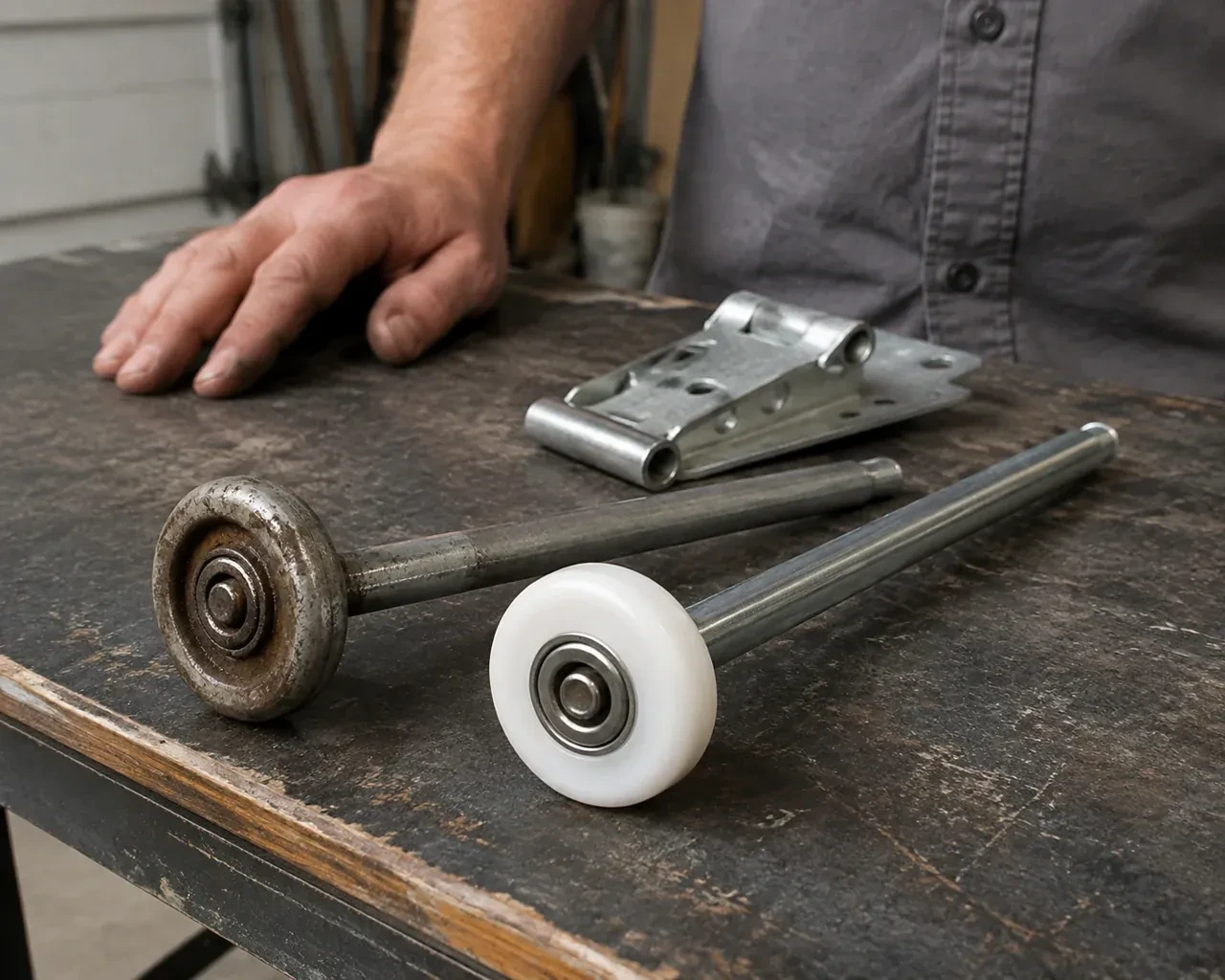
Each edge hinge cradles a roller stem, and the two wear together. The technician spins every wheel, looks for cracked or flat-spotted tires, checks that the stem has the right length for the hinge it sits in and that the bearing turns without grinding. A roller that has seized drags at the hinge on every trip, and a stem that is too short lets the wheel wander out of the track and twist the hinge. Where rollers are worn, changing them while the hinge is off costs a few minutes and stops the new hinge inheriting the strain that finished the old one.
Going over the rest of the hardware
With tools out and the door still, the technician goes down the whole door: every hinge screw snugged, roller stems and hinge knuckles given a garage door lubricant, top fixtures checked for tight fasteners, and the track brackets on the jambs confirmed secure. The bottom brackets are looked at but left alone, because they anchor the lift cables and are under spring tension. Struts and their fasteners get the same pass. This sweep takes little time and usually catches the next loose screw before it becomes the next cracked hinge, so the door leaves in better shape than the single repair would suggest.
What was fitted, written down
Before leaving, the technician tells you which hinges were replaced, their numbers and gauge, whether rollers or backer plates went on, and anything corrected along the way such as a wrong-numbered hinge or a loose track bracket. Write it inside the door manual or on a card near the opener, along with the door's make and panel count. Hinge widths and hole patterns vary between manufacturers, so the next technician, or you at the parts counter, can match parts without measuring from scratch. If some hinges were left in place as sound, their condition goes on the same note so you know what to watch.
Garage Door Hinge Replacement
In the van
- Hex-head self-drilling screws
- Carriage bolts, nuts and washers
- Replacement rollers
- Flashlight and level
- Track clamps or locking pliers
What affects the quote
Same fees day, night or weekend
1Rollers renewed at the same time
Where a roller is cracked, seized or flat-spotted, replacing it while the hinge is off is efficient, and the roller set is listed as an optional item you can accept or decline.
2Corrosion and seized fasteners
Screws rusted solid take time to drill out, and heavily corroded hinges on the lower joints are replaced rather than reused, which shows in the parts list.
3Edge hinge or centre hinge
A centre hinge unscrews and refits in a few minutes. An edge hinge carries the roller and has to be worked out of the track, so it takes longer and is often paired with a roller.
Garage Door Hinge Replacement: questions
Is the bracket at the bottom corner a hinge too?
No, and it is the one piece of hardware on the door that stays untouched during hinge work. The bottom bracket in each lower corner holds the bottom roller and anchors the lift cable, so it carries spring tension whenever the springs are wound. Many manufacturers fit tamper-resistant fasteners there. Changing a bottom bracket means unloading the springs first, which is a separate job with its own method.
Why is there a gap opening between two panels as the door goes up?
The two panels at that joint are no longer being held together on one side. A hinge that has cracked through, pulled its screws or lost its pin lets the panels hinge open around the remaining hardware, and the gap shows as they round the curve where the joint flexes most. Replacing the failed hinge, and checking its partner on the other end, brings the panels back into line.
Do the rollers get replaced with the hinges?
They are checked every time and replaced when they need it. The roller stem sits in a tube on the edge hinge, so when that hinge comes off the roller is already in hand, and fitting a new one adds a minute. A wheel that is cracked, flat-spotted or grinding on its bearing is the sort of thing that strained the hinge, so leaving it would ask the new hinge to carry the same load.
Springs & Hardware
- Garage Door Track Repair or ReplacementHalfway up, the door lurches and one roller rides onto the lip of the channel.
- Garage Door Cable ReplacementThe car bumper kissed the door on the way in.
- Torsion Spring ReplacementLooking up at the coil above the door, you can see a clean split with a gap of several centimetres…
Garage Door Hinge Replacement near you
Every garage door service we offer in Toronto is described the same way: what you might have noticed, what the technician checks first, how the work is done and what you have afterwards. Start with the symptom you are seeing and the right service will be easy to find.